- Target high-intent, bottom-of-funnel search traffic by building competitor comparison pages optimized for profitable "alternative" and "versus" keywords.
- Utilize server-rendered, semantic HTML tags rather than dynamic JavaScript widgets to ensure search engine crawlers can properly index your comparative data for featured snippets.
- Transform basic feature checklists into persuasive, benefit-driven copy hooks that directly address your buyers' specific operational bottlenecks and pain points.
- Establish brand credibility and avoid trademark infringement claims by objectively acknowledging competitor strengths and utilizing plain text instead of official competitor logos.
- Maximize conversion rates by combining mobile-responsive, scannable table designs with strategic call-to-action placements and authentic switcher testimonials.
By structuring search-friendly comparison tables, brands can capture high-intent traffic with machine-readable data and benefit-led narratives that convert at a much higher rate than standard blog posts. These specialized assets function as the final bridge between a prospect identifying a specific need and committing to a commercial solution. You can transform your comparison pages into high-performing revenue engines by aligning technical search engine optimization (SEO) with psychological conversion triggers.
Many digital marketers struggle with a persistent dilemma: their comparison pages either fail to rank due to technical crawlability issues or fail to convert because the copy lacks persuasive power. This guide details exactly how to align structural technical SEO with conversion rate psychology to turn casual searchers into buyers.
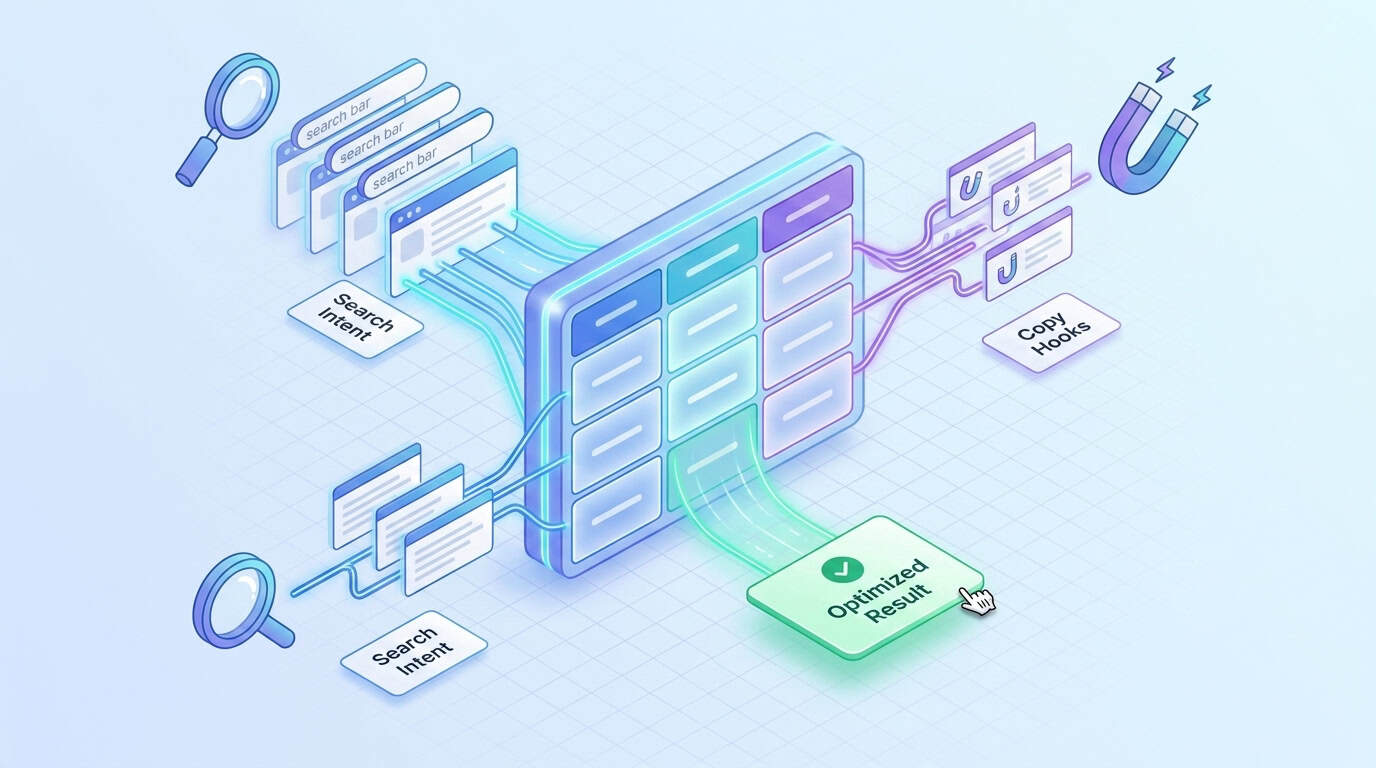
The Strategic Power of Competitor Comparison Pages in B2B SaaS
Competitor comparison pages represent some of the most profitable assets within a comprehensive bottom-of-funnel content marketing strategy. These specialized pages move prospects through the final stages of the evaluation process by providing the clarity needed to justify a purchase decision. When built correctly, they reduce the time it takes for a buyer to move from curiosity to a signed contract.
Demystifying Bottom-of-Funnel Search Intent
Prospects searching for software alternatives have usually moved past the initial discovery phase and understand their internal pain points clearly. They're no longer looking for broad industry education or basic definitions of a service. Instead, they're actively hunting for specific product differentiation that addresses their unique operational bottlenecks and budget constraints.
Capturing these users requires a deep understanding of their psychological state during the commercial transition. They're looking for a reason to choose one platform over another based on specific outcomes and feature sets.
At this final stage, buyers have completed their initial research and are actively looking to purchase or subscribe. They use high-commercial-intent keywords, such as brand comparisons, pricing queries, or specific "alternative" software solutions to justify their final investment.
Focusing on these high-intent users allows a brand to bypass the lengthy nurturing cycles associated with top-of-funnel content. The goal here is to answer the final set of questions a buyer has before they enter credit card details or request a formal demo.
The High-Value Return on Investment (ROI) of Alternative Keyword Strategies
An alternative keyword strategy yields significant business value by targeting queries with exceptionally high conversion rates. Users who search for terms like 'versus' or 'alternative' are demonstrating a clear readiness to switch providers or start a new subscription. These comparison queries often convert exceptionally well; a study by Grow and Convert found that comparison and alternative keywords averaged an 8.43% conversion rate, with some high-intent matches easily exceeding 10%.
Brands can effectively capture high-intent traffic that competitors are often spending large sums to acquire through paid search channels. By ranking organically for these terms, a company can reduce its marketing spend over the long term. This systematic approach allows smaller brands to leverage the brand awareness and marketing spend of much larger industry incumbents.
Using these comparison keywords helps build a defensive and offensive SEO moat. When a prospect searches for a market leader, your brand appears as a viable and perhaps superior option. Intercepting competitor-branded searches creates a shortcut in the buyer's journey that directly contributes to rapid revenue growth and market share expansion.
Technical Architecture for Search-Friendly Comparison Tables
Technical execution is the bedrock upon which all successful competitor comparison pages are built. Even the most persuasive copy remains ineffective if search engine crawlers cannot easily locate, parse, and index the comparative data points. Technical SEO and on-page copy must work together to ensure the page achieves and maintains high search rankings over time.
Why Client-Side Rendering Limits Search Table Indexation
Many modern websites rely on dynamic, JavaScript-heavy comparison widgets or iframes to display product features. These client-side rendered elements often create significant hurdles for search engine spiders that struggle to execute complex scripts efficiently. While Google can execute client-side scripts, its rendering process is multi-stage and resource-intensive compared to parsing static HTML instantly, as explained in Google's official JavaScript SEO basics guide.
Relying on lazy-loaded plugins or third-party comparison scripts can create indexation delays and crawl budget inefficiencies. When a crawler visits the page, it may see an empty container where the high-value comparison data should be. This lack of visible content prevents the page from being indexed for the specific features and metrics that buyers are searching for.
Server-rendered, static HTML is the gold standard for comparison page architecture because it ensures the data is available immediately. By delivering the content directly in the server response, you guarantee that every data point is indexed. This approach provides a faster user experience and a more reliable signal to search engines about the page's relevance.
| Feature or Metric | Client-Side Rendering (CSR) | Server-Side Rendering (SSR) |
| Crawlability | Delayed; relies on Google's second-wave indexing. | Instant; fully crawlable on the initial search pass. |
| Page Speed / LCP | Slower; requires downloading and executing large JS files. | Faster; loads pre-rendered HTML immediately. |
| Rich Snippet Eligibility | At risk if schemas are loaded dynamically via JS. | High; markup is clean and parsed instantly. |
If you want modern design aesthetics without the SEO drawbacks of JavaScript, consider using CSS Grid or Flexbox to style your tables. These methods allow you to create beautiful, responsive layouts while keeping the underlying content in clean HTML. This ensures your tables look great on all devices while remaining perfectly transparent to search engine bots.
Semantic HTML Table Formatting and SEO Best Practices
Building search-friendly comparison tables requires the use of specific semantic HTML elements that define the structure of the data. Using tags like <table>, <thead>, <tbody>, <th>, and <td> allows search engine spiders to map the relationships between different entities. This clean formatting makes it easy for algorithms to understand which row corresponds to which feature and which column corresponds to which brand.
When search engines can easily parse the structure of a table, the likelihood of winning a featured snippet increases significantly. Tabular data is often pulled directly into search engine results pages to answer user queries. Using semantic tags ensures your data is eligible for these high-visibility placements, which can drive massive amounts of referral traffic.
Clean code also improves the accessibility of the page for users with screen readers and other assistive technologies. A well-structured table provides a better user experience for all visitors, regardless of how they access the site.
Essential Semantic HTML Tags for Comparison Tables
<table>: The container element that defines the start and end of the tabular data section.<thead>: Groups the header content in a table, allowing search engines to identify the labels for each column.<tbody>: Contains the primary body of the table where the comparison data and features live.<th>: Defines a header cell, providing context for the specific feature or product name.<td>: Represents a standard data cell holding the specific value or checkmark.
Properly nested tags ensure that comparison tables display product specifications correctly for both users and crawlers. This structure serves as a clear signal of quality to search algorithms. It also helps your site capture more specific long-tail traffic by making your feature lists machine-readable.
Schema Markup and Semantic Tags for Comparison Data
Structured data and schema markup are powerful tools for enhancing the search visibility of competitor comparison pages. While there is no single schema type for a comparative table, you can nest individual items using Product Schema and AggregateRating markup. This metadata allows search engines to parse rich product snippets directly from your comparison data.
Using ItemList schema markup further signals to crawlers that the content contains organized data points that are relevant to specific queries. This reinforces the page's topical authority within a specific niche by establishing clear entity relationships between your brand and your competitors. Structured data defines feature sets in a way that AI search agents can easily interpret.
Implementing these technical layers helps your page stand out in a crowded search landscape through rich snippets. When a search result shows ratings or specific features directly in the snippet, the click-through rate typically improves.
Comparative Analysis for Multi-Entity SEO
Search engines don't just look at individual keywords; they analyze the relationships between different entities on a page. When you build a comparison table, you're creating a knowledge graph node that links your brand to your competitors. This semantic connection maps your brand directly into the Knowledge Graph, helping search engines categorize your software within the correct industry vertical while building robust topical authority.
Effective multi-entity SEO involves mentioning your competitors in a way that clarifies your own market position. By listing your brand alongside industry leaders, you signal to search engines that your product is a relevant alternative. This entity-based approach is far more effective for long-term rankings than simply repeating keywords.
You can improve your relevance by using industry-standard terminology that search engines already associate with your competitors. This doesn't mean copying their copy, but rather using the same conceptual language to describe features. Sharing conceptual language makes it easier for algorithms to understand that you are solving the same problems for a similar audience.
This entity-driven approach also optimizes your content for AI-powered search experiences and LLM engines (like Google AI Overviews). These systems analyze tabular datasets and clear relational text to extract comparison data and generate conversational recommendations.
Mobile-First Comparison Table Design Patterns
More stakeholders are reviewing comparison data on mobile devices, which makes responsive design a requirement for conversion. A standard horizontal table often breaks on smaller screens, forcing users to scroll excessively or leave the page. You must transition your table layout into a mobile-friendly format without losing the semantic context for search crawlers.
- Vertical Card Stack: Use CSS media queries to stack wide horizontal rows into vertical cards on mobile viewports, enabling users to evaluate products without forced horizontal scrolling.
- Sticky Context Columns: Keep the first column (containing the feature labels) static as users scroll horizontally through competitors on narrow devices.
- Responsive Toggles: Allow users to select and display only one competitor at a time alongside your brand to avoid cluttering small mobile screens.
- Touch Target Standards: Maintain clear spacing and tap-target sizes (minimum 48x48 pixels) for all mobile buttons, checkmarks, and interactive links.
Overcoming the 12-Tab Problem with Product Feature Comparisons
The 12-tab problem describes a common behavior where modern buyers evaluate software by opening dozens of tabs at once. They compare your landing page side-by-side with your competitors, social review sites, and community forums. In this high-stakes environment, your page structure must be designed to capture and hold attention immediately.
Designing Scannable Comparative Table Layouts
Visual organization is key to ensuring that your comparative table layout is effective for a distracted reader. You should organize the information so that your brand's unique advantages are prioritized without appearing overtly biased or cluttered. Sticky table headers are helpful for maintaining context as the user scrolls through long lists of technical specifications.
Mobile-responsive formatting is a requirement, as many stakeholders may review comparison data on tablets or phones. A table that breaks on smaller screens or requires excessive horizontal scrolling will drive users back to the search results.
A successful table must be instantly scannable, allowing a user to grasp your core advantages in under 10 seconds. Use clear labels and consistent icons to represent the presence or absence of specific features. This rapid delivery of value helps your brand stand out in the sea of open tabs that the prospect is currently navigating.
Defining the Right Comparison Parameters and Metrics
Choosing the right metrics for a product feature comparison requires a strategic focus on what matters most to the buyer. It's tempting to list every single feature your software offers, but this often leads to cognitive overload. Too much information can confuse the reader and cause them to bounce before they understand your unique value proposition.
Instead of listing baseline industry features that offer no differentiation, curate your table parameters around high-value workflows and common sales objections. Prioritize proprietary capabilities, migration speed-to-value, and key operational bottlenecks where your software holds a distinct structural advantage over the competition.
Designing and Writing Persuasive Software Charts
While technical structure ensures that users find your page, the quality of your copy determines whether they convert. Designing and writing persuasive software charts involves more than just listing data; it requires building a narrative. Many brands lose potential customers by ignoring this critical transition from technical organization to persuasive copywriting.
Moving Beyond the We Win Everything Green Checkmark Trap
Nobody trusts a comparison table that shows a flawless wall of green checkmarks for your brand and a sea of red marks for the competition. Modern B2B buyers are highly skeptical of completely one-sided charts that lack any sense of objectivity. When a chart claims a product is perfect in every single category, it often undermines the credibility of the entire page.
A conversion-focused alternative involves acknowledging that competitors may have strengths in certain areas. By positioning your product's advantages for a specific target audience, you build a deeper level of trust with the reader. This balanced approach demonstrates that you understand the market and are confident in your specific niche.
Acknowledging when a competitor is a better fit for a specific use case does not hurt conversions; instead, it establishes transparency. This honesty builds credibility with ideal customers, framing the comparison as a matter of alignment rather than a one-sided sales pitch.
Identifying and Leading with Customer Pain Points
Uncovering deep customer pain points is the first step in writing copy that resonates with a frustrated user. You can find valuable competitive intelligence by mining public review platforms, forums, and social media channels where users discuss their software experiences. Pay close attention to why customers are leaving your competitors and what specific frustrations they frequently mention.
Turn these negative competitor experiences into active value pillars within your comparison copy. If users complain that a competitor has a slow interface, highlight your platform's sub-second response times as a primary advantage. Positioning your brand as the direct solution to a competitor's biggest failures makes your offering immediately more attractive.
This strategy ensures that your copy hooks are rooted in reality rather than vague marketing speak. When a prospect reads a differentiator that addresses their exact daily frustration, they're much more likely to take action. This alignment between user pain and product solution is the hallmark of a high-converting comparison page.
Crafting Sticky Copy Hooks for Key Differentiators
Drafting persuasive copy hooks requires transforming boring, feature-based checklist items into dynamic, benefit-driven statements. A simple checkmark next to a feature name doesn't explain how that feature will make the user's life easier. Instead, use short, punchy phrases that describe the specific outcome the user can expect from using that feature.
For example, a bland point like 'has API' can be rewritten as 'build custom workflows in minutes with our developer-friendly Representational State Transfer (REST) API.' This version is a sticky copy hook because it focuses on the benefit of speed and ease of use rather than just the technology. Copy hooks highlight unique advantages by helping the reader visualize how the product will fit into their existing tech stack.
Psychological mechanisms like the availability heuristic make benefit-first messaging highly memorable for prospective buyers. When information is easy to process and linked to a positive outcome, it stays with the reader longer. These sticky hooks ensure that your brand remains top of mind as the user continues their evaluation of other options.
The Fair and Compliant Framework for Competitor Comparison Pages
Maintaining compliance and fairness on your comparison pages is essential for protecting your brand's reputation. While the goal is to drive conversions, the content must remain factual and professional to avoid unnecessary legal conflicts or public relations issues. A fair approach builds long-term authority and ensures that your marketing efforts are sustainable.
Navigating Legal Gray Areas: Trademark Use and Defamation
Referencing competitor trademarks requires a careful understanding of fair-use guidelines within your specific jurisdiction. You can safely use a competitor's name for a factual comparison, but avoid using their official logos altogether. Using logos can trigger trademark infringement claims and lead to unwanted legal complications that distract from your marketing goals.
Ensure that every claim made in your comparison table is factual, verifiable, and up to date. Avoid making defamatory statements or using language that could be interpreted as a malicious attack on a competitor's character. Stick to comparing features, pricing, and performance metrics that can be backed up with publicly available data or user tests.
Including a clear and prominent disclaimer at the bottom of the page is a standard best practice for legal protection. This disclaimer should state that the information provided is for comparative purposes and was accurate at the time of publication. Keeping your copy objective and factual acts as your primary defense against legal challenges from disgruntled competitors.
Establishing Credibility: Giving the Competitor Due Credit
Admitting that a competitor has a genuine strength can disarm a reader's natural skepticism and establish your brand as a credible authority. When you provide a fair assessment of the market, the reader is more likely to trust your claims about your own strengths. This level of professional maturity is often a deciding factor for high-level B2B decision-makers.
You can strategically frame a competitor's strength as a characteristic of a different use case that doesn't overlap with your target audience. For instance, you might note that a competitor is excellent for small teams with basic needs, while your product is built for complex enterprise requirements. This makes it clear that while they're good at what they do, you're the strategic choice for the reader's specific situation.
Playing fair in competitive markets also prevents your brand from appearing desperate or unprofessional. It fosters a healthy competitive environment where the focus remains on delivering value to the customer. This credibility pays dividends over time as your brand becomes known for its honesty and deep understanding of industry standards.
Designing the When to Choose Us vs. Them Section
A highly effective way to structure comparison content is to include a transparent when to choose section. This section should clearly divide the page into two distinct columns that outline different user profiles and needs. One column describes the ideal customer for the competitor, while the other describes the ideal customer for your own platform.
This transparent classification filters out bad-fit prospects who are highly likely to churn. By telling some users that the competitor might be better for them, you increase the trust of those who fit your ideal profile. It ensures that the leads you do generate are highly qualified and have a higher likelihood of successful implementation.
This framework significantly increases trial-to-paid conversion rates because the users who sign up already have a clear understanding of why your product is the right choice for them. It reduces the burden on your customer success team by setting accurate expectations from the very first interaction. Honesty in this section serves as a powerful conversion tool that benefits both the brand and the customer.
Optimizing Comparison Landing Pages for Conversions and Signups
Generating search traffic through technical SEO is only the first step in a successful comparison strategy. The page itself must be meticulously optimized to convert high-intent comparative traffic into tangible business results like leads or demo signups. Conversion rate optimization ensures that your organic visibility translates directly into revenue growth for your company.
Strategic Call-to-Action Placements
The placement and design of your calls-to-action can have a dramatic impact on the success of a comparison landing page. You should position primary and secondary calls to action (CTAs) in the hero section where they're visible immediately upon page load. Another high-value location is directly underneath the comparative table, where the user has just finished reviewing the data.
Use contrasting brand colors to ensure your buttons stand out from the rest of the page elements. The text on these buttons should be value-focused and action-oriented rather than generic prompts like "submit" or "click here". Phrases like "start your free trial" or "get my custom demo" are much more effective at driving user engagement.
Don't forget to include a final CTA at the very bottom of the page to capture users who have scrolled through all the content. This ensures that no matter where the user stops reading, they're never more than a few inches away from the next step in the funnel. Consistent and strategic placement guides the user toward the desired conversion action without being intrusive.
Leveraging Switcher Testimonials and Social Proof
Social proof is a powerful motivator, but generic customer reviews are often ineffective on specialized comparison pages. Instead, you should curate and present switcher testimonials from customers who migrated directly from the competitor mentioned on the page. These testimonials carry much more weight because they come from people who have experienced both platforms.
A high-quality switcher testimonial should clearly highlight the specific pain points the user faced with the previous software. It should then describe the immediate relief and success they found after switching to your platform. Highlighting a previous customer's migration mirrors the prospect's own journey and provides the social validation they need to make a confident decision.
Presenting these testimonials near the comparison table or within the us-vs-them section reinforces the data with real-world experiences. It transforms abstract feature lists into concrete stories of business improvement and user satisfaction. This combination of data and narrative is the most effective way to persuade a skeptical B2B buyer.
Measuring the Impact of Comparison Pages
Tracking the right key performance indicators (KPIs) proves the profitability of your comparison strategy. Monitor metrics like trial signup rates from specific alternative URLs, time on page, and the pipeline velocity of leads generated through these bottom-of-funnel assets. Combining Google Search Console data with your CRM analytics provides a clear picture of how comparative content accelerates the buyer's journey and drives bottom-line revenue.
Scale Your Bottom-of-Funnel Conversion Strategy with Brand Voice
Executing high-intent competitor comparison pages requires a precise blend of technical search engine optimization, in-depth competitor research, and highly persuasive copywriting. These pages are more than just a list of features; they're a strategic narrative that positions your brand as the strategic choice for your ideal customer. By focusing on semantic HTML, benefit-driven copy hooks, and fair-use guidelines, you can build an organic marketing engine that drives consistent growth.
Successfully managing these complex campaigns at scale requires expertise and resources that many internal teams lack. Partnering with Brand Voice allows you to implement these strategies without the technical overhead of a large marketing department. Book a demo today to learn more about how we handle the entire campaign lifecycle, from the initial topical strategy and competitor analysis to the final stages of writing and technical optimization.