
- The dogfooding method involves using your own software internally to transform professional workflows into an authentic narrative that builds brand authority and consumer trust.
- Transitioning from theoretical guides to practitioner-led, product-led content provides real-world evidence of feature utility that traditional marketing cannot replicate.
- Documenting the messy middle of product usage through radical transparency helps SaaS brands overcome buyer skepticism by showing how tools handle daily technical challenges.
- Establishing a SaaS dogfooding implementation framework leverages internal user testing to generate proprietary data and high-impact stories that resonate with sophisticated buyers.
- To maximize the ROI of dogfooding content, companies must balance internal reliance with external user feedback to ensure the product solves broad market problems rather than just internal needs.
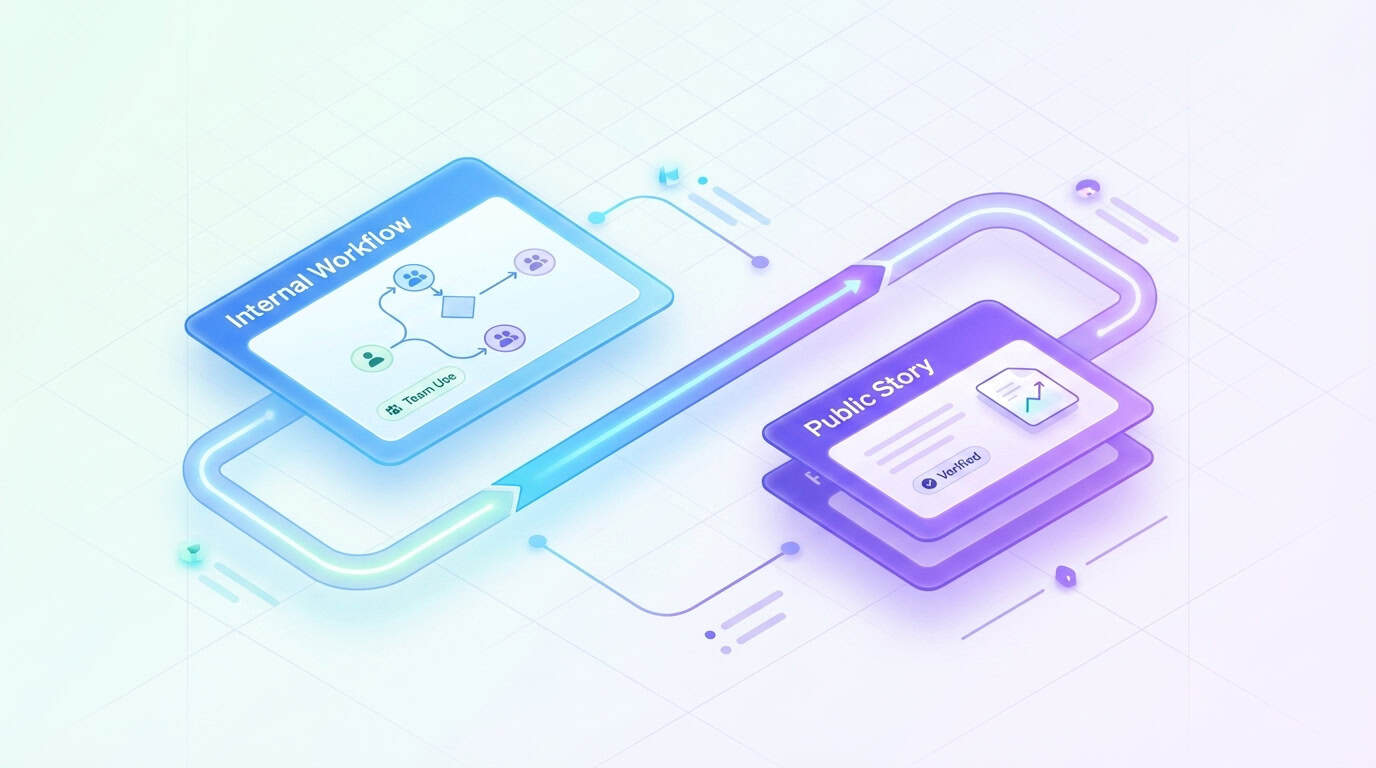
Software companies often struggle to prove that their tools solve the problems they claim to fix. The dogfooding marketing strategy addresses this gap by showing how a product functions in a professional environment. Dogfooding transforms internal workflows into a narrative that resonates with potential customers who face similar challenges.
Transparency serves as the foundation for modern brand authority. When a team relies on its own software to hit deadlines or manage data, it creates a level of accountability that traditional advertising cannot replicate. Understanding the mechanics of these internal systems is the first step toward establishing a credible foundation that overcomes consumer skepticism.
What is the Dogfooding Method in the Context of SaaS Marketing?
The term eating your own dog food originated in the software engineering world to describe the practice of using one's own products or services. In 1988, Microsoft manager Paul Maritz sent an email titled "Eating our own dog food" to a test manager. He challenged the team to increase internal usage of the company's LAN Manager product. The practice was initially a quality assurance measure designed to catch bugs before customers did.
In a modern content marketing context, dogfooding has evolved from a simple QA process into a technical narrative framework that connects specific features to tangible business results. It bridges the gap between marketing claims and real-world performance by providing evidence of the product in a high-stakes environment. Companies no longer use the tool to find errors. They use it to build their business and then document that journey for their audience.
Establishing a SaaS dogfooding implementation framework allows a company to create content that feels earned rather than manufactured. It requires the team to treat their own operations as a laboratory for the product's features. When you share these results, you provide a level of proof that a standard sales pitch can't match.
The Psychology of Trust: Why Early Adopters Crave Internal Proof
Trust functions as the essential foundation for startups looking to gain a foothold in a crowded market. Early adopters are naturally skeptical of polished sales pitches and unverified claims. Seeing a founder or a development team rely on their own tool shows skin in the game and proves the team believes in their solution.
By relying on the software for critical tasks, developers demonstrate that their interests align with the buyer's, fostering a sense of shared purpose.
The Rise of the Skeptical SaaS Buyer
Modern SaaS buyers are overwhelmed by feature-washing and empty promises from brands that look identical on paper. Traditional marketing has lost its edge because it often feels detached from the software's actual utility. When every landing page claims to be the most efficient solution, buyers stop listening to the claims and start looking for evidence.
Transparency has become a major competitive advantage in this environment. Customers want to see the product in action within the context of the company that actually built it. They aren't looking for a perfect demo environment. They want to see how the tool handles high-concurrency environments and edge-case scenarios found in daily operations.
Authentic case study creation often begins with these internal explorations. By showing the product solving real problems for the creators, a brand proves that its software isn't just a revenue generator, but a functional tool. Shifting from generic promises to visible proof helps break down the barriers to skepticism that many buyers hold.
Building Authority Through Daily Reliance
Internal use builds authority by turning every employee into a power user. This internal usage allows teams to provide fast feedback and ship a higher-quality product. It creates a culture in which the people writing the content are the same ones using the software to make data-driven decisions.
When a team relies on its own tool for survival or growth, the content they produce is inherently more grounded in reality. Relying on the tool daily ensures that the advice shared in blog posts or videos isn't theoretical. It's based on what actually worked during a Tuesday morning sprint or a high-pressure product launch.
Adopting internal usage helps companies maintain customer empathy. By experiencing the same workflows as their users, teams can speak with nuance that outsiders can't match. Establishing authority translates into content that feels helpful rather than sales-focused, which is exactly what sophisticated buyers are searching for.
Moving from Theory to Practice: The Shift to Product-Led Content
Most company blogs are filled with generic advice that could apply to any business in any industry. Product-led content moves away from this theoretical approach by showing exactly how the team uses their own tool to execute their strategy. Adopting product-led content transforms the brand from a distant teacher into an active practitioner.
Product-led content is the logical evolution of the how-to guide. It moves from explaining what can be done to documenting what we actually did. Internal workflows generate proprietary data, which serves as the foundation for this transition.
The Limitations of General How-To Guides
Generic how-to guides often fail to engage sophisticated audiences because they lack the nuance of real-world obstacles. These guides often present a sanitized version of a process that feels detached from the actual user experience. When a reader senses that the author hasn't actually performed the task they're describing, the content loses all credibility.
Theoretical content is also incredibly easy to replicate with generative AI. A machine can summarize best practices in SEO or project management, but it cannot describe the friction of using a particular tool. Dogfooding content remains unique to the brand because it's based on proprietary internal experiences.
Sophisticated users can tell when a brand is just checking a box for SEO. They want to see the edge cases, the limitations, and the specific configurations that led to a successful outcome. Without the context of internal usage, content often remains too superficial to provide real value to a professional reader.
Transitioning from Teacher to Practitioner
Moving from a teacher mindset to a practitioner mindset requires a fundamental shift in how a team views content. Instead of lecturing the audience on what they should do, the team shares their journey of what they are actually doing. Positioning the team as practitioners makes the product the hero of the story without the content feeling like a traditional advertisement.
Meta-content creation means the article itself is a byproduct of using the tool. For instance, a marketing team might write a post about how they used their own analytics tool to optimize their blog. The post serves as both a tutorial for the user and a proof of concept for the product's effectiveness.
Sharing the journey creates a more compelling narrative than a static list of tips. It allows the audience to follow along with the company's growth and learn from its successes and failures. Cultivating a practitioner-led approach builds a community of users who feel like they're growing alongside the brand.
How Dogfooding Drives Authentic Storytelling
Engaging stories rarely come from brainstorming sessions. They emerge from the friction of daily work. Authentic storytelling emerges when a team documents the specific problems they encountered and how their product solved them. Documenting friction turns routine tasks into a series of relatable narratives.
By analyzing different product-led content examples, startups can see how to balance technical documentation with marketing flair. It's about finding the narrative thread in your daily operations. Finding the narrative thread in operations makes your brand feel human and approachable.
Using Your Own Product to Solve Internal Pain Points
Identifying internal problems that the product was designed to solve is the first step in this process. When a team uses its own software to fix a broken workflow, they create a perfect case study. Documenting these specific use cases provides a proof of concept that potential customers can easily visualize for their own businesses.
It's important to be specific about the problem, the workflow within the tool, and the ultimate result achieved. Vague claims about improved efficiency are less persuasive than a detailed breakdown of how a specific feature saved four hours of manual data entry. Precision in these stories helps the reader understand the technical mechanics of the solution.
A collection of specific use cases serves as a library of product-led content examples. These examples are far more effective at converting leads than a standard features list. They show the tool in its natural habitat, performing the exact tasks that the customer is likely trying to accomplish.
Documenting the Messy Middle: Transparency as a Value
Transparency involves showing the messy parts of product usage, such as initial failures or complex setups. Many brands are afraid to show workarounds or struggles, but these details actually make the eventual success more believable. A perfectly smooth process often feels fake, whereas a documented struggle feels honest.
Showing the struggle humanizes the brand and builds a deeper connection with the audience. It proves that the team is composed of real people who face real technical challenges. When a company admits that a certain feature was difficult to configure but ultimately worth the effort, they gain the reader's respect.
Being transparent about complexity sets realistic expectations for the customer. It prevents the frustration that arises when a user expects a magic-button solution but finds a tool that requires thoughtful implementation. By being transparent, the brand builds a foundation of long-term trust rather than just securing a quick, uninformed sale.
Setting Up Your Internal Dogfooding Content Framework
Documentation should not be a one-off marketing campaign. It must be a habit. Integrate it into daily operations across every department to ensure consistency. A structured framework ensures that internal insights are consistently captured and transformed into public-facing content.
Marketing teams need to know how to audit internal product usage. This requires open lines of communication between product developers and the content team. Your team should aim to surface stories that show the product in action without disrupting the flow of work.
Quick Start Checklist for Dogfooding Content
Building a dogfooding engine requires a repeatable process for capturing insights. Start by creating a #product-stories Slack channel where team members can post quick wins or interesting use cases. Using a dedicated channel centralizes the raw material for your future articles.
Next, ask your product team to record one five-minute Loom video of a new feature daily. These raw clips are perfect for internal user testing content that can be refined for social media. They provide a behind-the-scenes look that builds immediate credibility with your audience.
Finally, tag the marketing lead in technical Jira or GitHub tickets that solve common user pain points. When a developer fixes a friction point the team was facing, it creates a narrative for a blog post. Integrating marketing with the technical roadmap ensures your content strategy is always aligned with your product's evolution.
Identifying Internal Use Cases Worth Sharing
To find compelling stories, a team should audit internal departments like marketing, sales, or engineering. Not every use of the product is worth a blog post. It's important to differentiate between a standard use case and a remarkable story. A remarkable story is one where the tool was used in a creative or high-impact way.
Look for the Aha! moments that occur during daily operations. These moments usually happen when a team member realizes that a specific feature has just made their life significantly easier. These realizations are the seeds of great content because they capture the genuine excitement of a user discovering value.
The marketing team should treat internal user-testing content as a primary source of social proof. These internal tests provide the data you need to back up your marketing claims. It turns your employees into your most convincing case studies.
Choosing the Right Mediums: From Loom to Long-form Blogs
Different segments of an audience consume content in different ways. Raw video walk-throughs are excellent for showing the messy middle and providing quick tutorials. These videos feel unpolished and authentic, which reinforces viewers' trust.
Detailed technical blogs are better suited for deep dives into complex workflows or data-backed results. These posts provide the depth that professional users need to replicate your success. Long-form content also allows for the inclusion of screenshots, JSON payloads, and code snippets that add technical weight to the narrative.
Behind-the-scenes social media posts and public-facing changelogs help maintain a steady cadence of updates. A changelog that explains we built this because we needed it for our own project provides valuable context. It shows that the product is evolving based on the actual needs of professional practitioners.
Developing a Building in Public Narrative
The Building in Public movement is a natural fit for the dogfooding method. It involves weaving internal product usage into a larger brand story about growth, learning, and evolution. The 'building in public' narrative isn't just about the product. It's about the company's mission and the people behind the code.
Sharing the roadmap and the "why" behind certain feature developments, based on internal feedback, builds community. When users see that a feature was created to solve a problem the team faced, they feel more connected. It makes the brand feel like a collaborative partner rather than a faceless vendor.
Building in public narratives also helps attract talent and investors. People want to be part of companies that are transparent and clearly passionate about their own craft. By documenting the journey, a brand creates a legacy of innovation and honesty that sets it apart from competitors.
Internal User Testing as a Content Goldmine
Internal user testing is often viewed as a task solely for developers and QA teams. However, it's a rich source of content for marketers looking to explain the product's value. The feedback loop between the team and the product generates an endless stream of content ideas grounded in actual usage.
Bug reports inform content strategy. They highlight the pain points that real users face and provide an opportunity to explain how the product is evolving to solve them. This transparency turns a negative experience into a positive story about improvement.
Turning Bug Fixes and Feature Requests into Content
Even the boring aspects of product development can be turned into engaging content if handled correctly. Explaining why a feature was built in response to an internal need provides the context users need to understand its value. It moves the conversation from feature announcements to specific problem-solving narratives.
Documenting the resolution of an internal pain point can serve as a tutorial for customers facing the same issue. If the marketing team struggled with a specific reporting task and the product team built a fix for it, that's a story. Sharing that fix shows that the company is responsive and dedicated to perfecting the user experience.
These stories provide a level of technical detail that is often missing from marketing copy. They allow the brand to discuss the tool's architecture or the logic behind a specific workflow. This depth appeals to the technical decision-makers who are often the hardest to convince in a SaaS sales cycle.
The Feedback Loop: How Content Improves the Product
There is a symbiotic relationship between content creation and product development. Writing about the product often reveals UX flaws or new feature opportunities that weren't obvious during initial testing. When a marketer has to explain how a feature works, they quickly find out if that feature is actually intuitive.
Continual internal assessment improves the product while also giving the audience insight into the team's commitment to excellence. If a team writes an article and realizes a workflow is too complicated, they can fix it before the article is even published. Proactive refinement ensures that the final product is battle-tested.
Documenting these improvements shows the audience that the company is never satisfied with good enough. It reinforces the idea that the team is the product's most demanding customer. Maintaining a commitment to continuous improvement is a powerful selling point for any SaaS brand.
From Microsoft to Linear: A Timeline of Dogfooding Excellence
Many of the world's most successful SaaS companies used dogfooding to find their initial traction and scale. These companies didn't just use their products. They made their internal usage a core part of their brand identity. Their success serves as a blueprint for startups looking to build authority through transparency.
Apple followed a path of radical internal reliance as early as 1980. Apple president Michael Scott wrote a memo stating that no more typewriters were to be purchased or leased. He argued that the team should first prove internally that the typewriter was obsolete before trying to convince customers. Scott's memo forced the company to rely on its own computers for all professional communication.
Microsoft famously lived by this method during the development of Windows NT. In 1991, Dave Cutler insisted that the team of over 200 developers use the early versions of the OS for their daily work. Rigorous internal testing ensured the system was robust enough for the global market. Today, Oracle continues this tradition by running Oracle Linux with infrastructure-scale deployments of over 42,000 servers and 4 million users across its global cloud network.
Modern startups like Linear and Slack have also made dogfooding a priority. Slack rolls out new features in an internal alpha release called Dogfood that every employee uses. At Brand Voice, we use our own platform to ensure our SaaS content marketing reaches the right audience. By studying these product-led content examples, we can see how internal reliance drives long-term market dominance.
When Dogfooding Fails
While the benefits are clear, dogfooding is not without its risks. The biggest danger is the development of echo chambers, where a team builds only features that solve their own narrow problems. Relying solely on internal feedback can lead to a product that is perfect for a software startup but misses the needs of the broader market.
If your team is too similar, you might miss the diversity of use cases in your actual customer base. You might ignore certain bugs or UX hurdles because your team has developed muscle memory for your specific workflows. It's important to remember that you are your own power user, but you are not every user.
To avoid this trap, you must balance internal feedback with external user testing. Use your internal usage to find the high-impact stories, but don't let it be your only source of truth. A healthy strategy uses dogfooding to build authority while remaining open to the messy reality of the outside world.
Overcoming the Risks of Radical Transparency
Showing the inside of a company can be intimidating for founders and marketing teams. There is a natural fear that being seen as unpolished or admitting to flaws will drive customers away. However, the benefits of trust usually far outweigh the risks of appearing less than perfect.
When you prioritize authentic case study creation over polished PR, you allow users to see the tool's true utility. It's about being real with your audience. Honesty about internal workflows creates a stronger bond than any perfectly sanitized advertisement ever could.
Addressing Bugs and Flaws Publicly
Handling product flaws revealed during the dogfooding process requires a strategic approach. Admitting a flaw and showing how it is being fixed actually increases trust rather than decreasing it. It shows that the company is honest and proactive, which are qualities buyers look for in a long-term partner.
There is a major difference between being unprofessional and being transparently human. Unprofessionalism is ignoring a problem or being careless with data. Transparency is acknowledging a technical limitation and explaining the steps being taken to resolve it.
When a team documents a bug they found while using their own tool, they prove they are paying attention. It reassures customers that the team is likely to find and fix issues before they ever encounter them. Being proactive with transparency is a hallmark of a mature, customer-centric organization.
Avoiding the Marketing Fluff Trap
The biggest risk of dogfooding content is that it can easily turn into a glorified press release. To keep it authentic, the writing must focus on the how and why rather than just the what. The goal is to provide a behind-the-scenes look, not a polished sales brochure.
Use real data, real screenshots, and real internal feedback to maintain credibility. If a team says a feature improved their workflow, they should show the before-and-after metrics. Readers can spot marketing fluff from a mile away, but they will pause to study a genuine data set or a candid internal memo.
Encourage team members to speak in their own voices rather than a sanitized corporate tone. Authenticity comes from the unique perspectives of the people actually doing the work. When you prioritize pillar content built on real experiences, your brand stands out in an oversaturated market.
Measuring the ROI of Dogfooding Content
Tracking the success of a dogfooding marketing strategy requires looking beyond basic metrics like page views. While traffic is important, the true value of this content lies in the quality of the audience it attracts. High-quality dogfooding content often leads to higher-quality trial sign-ups because the leads are better informed.
A successful dogfooding marketing strategy shifts the focus from vanity metrics to the quality of user education. You want to ensure your content helps users understand how to get the most out of your tool. You can track the profitability of content by looking at how these informed leads move through your sales funnel.
Dogfooding content often has a much longer shelf life than standard marketing posts. Because it is based on real workflows and technical problem-solving, it remains relevant as long as the tool continues to function that way. It serves as both a marketing asset and a piece of functional documentation, providing a dual return on investment for the brand.
Scale Your SaaS Authority with Practitioner-Led Content
Authentic dogfooding content is the future of SaaS marketing because it builds undeniable trust through visible proof. Moving away from theoretical advice toward practitioner-led storytelling allows your brand to break through the noise. By documenting your internal journey and adopting a "build in public" approach, you prove that your tool is a solution you believe in enough to use yourself.
While documenting internal processes is fundamental for building topical authority, transforming those insights into optimized articles requires a dedicated strategy. Many teams have the data and the stories, but lack the time to turn them into high-quality content. A structured approach to content production becomes a major competitive advantage for your business in this context.
We can help you turn your internal insights into high-quality, ready-to-publish SEO content. We understand how to capture the nuance of your internal workflows and turn them into narratives that resonate with your target audience. Your team has the stories, and we have the strategy to make the world see them. Contact Brand Voice to transform your internal workflows into your most powerful marketing assets.
