
- Implementing a topic cluster model utilizes a long-form pillar page as a central hub supported by specific cluster content spokes to signal deep topical authority to search engine algorithms.
- Strategic bidirectional internal linking between pillar pages and cluster articles passes link equity and creates a clear semantic map that helps search engines understand the relationships between related subtopics.
- Organizing content into a hub-and-spoke architecture effectively prevents keyword cannibalization by ensuring the pillar page targets broad head terms while individual spokes focus on unique long-tail keywords.
- Comprehensive topic clusters enhance brand visibility in Generative AI search results by providing the structured data points and exhaustive coverage that large language models require to verify expertise.
- Building topical authority through structured content mapping can lead to a 47% increase in organic traffic and significantly higher rankings for competitive core industry terms.
Many businesses struggle with content fragmentation, where isolated blog posts fail to rank for competitive terms. This scattershot approach often results in a library of content that lacks a cohesive strategy or clear direction for search engines. When you publish articles without a central theme, you miss the opportunity to demonstrate depth in your niche.
The topic cluster model offers a modern way to organize information into an interconnected body of work. It helps signal deep expertise and comprehensive knowledge to search algorithms, rather than chasing individual keywords. This framework allows a brand to build a logical structure that users and crawlers can easily navigate. Keep reading to learn more about leveraging topic clusters to dominate search results.
The Foundational Architecture of Topic Clusters
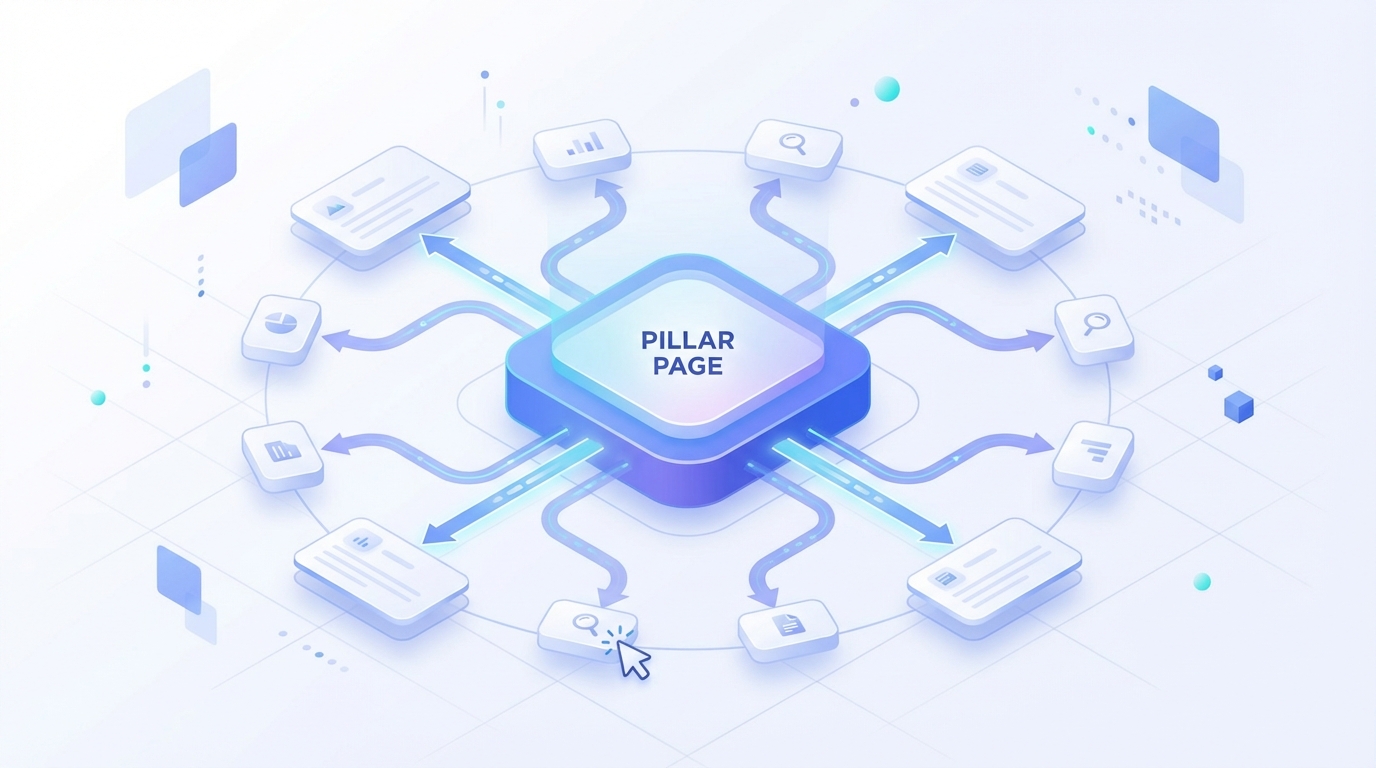
A successful content strategy requires more than just high-quality writing; it needs a deliberate organizational structure. The foundational architecture of topic clusters replaces the traditional site structure of isolated blog posts with a deliberate network of content. This hub-and-spoke model ensures that every piece of information supports a larger narrative. It transforms a standard blog into a powerful resource that search engines recognize as authoritative.
What is a Pillar Page? (The Hub)
A pillar page serves as the comprehensive, long-form guide and central hub for a specific, broad topic. These pages are typically extensive, often ranging from 5,000 to 10,000 words to ensure they cover a subject with sufficient breadth. It targets a broad, high-volume head term or core industry keyword that your business wants to own. While it covers the entire topic, it doesn't dive into extreme detail on every single point.
The primary purpose of the hub is to provide a high-level resource that touches on all related subtopics. It focuses on broad search intent, often informational for users just starting their journey. From this central page, you link out to all the more specific cluster pages within the group. This helps users find deeper information while keeping the main page focused on the big picture.
It's important to view the pillar page as the foundation of your topical authority. It should be easy to navigate and well-organized so that both users and search engines understand the hierarchy. Because it covers so much ground, it naturally becomes a valuable asset for earning backlinks. A well-constructed pillar page acts as the ultimate destination for anyone seeking a general understanding of the core topic.
By creating this central resource, you establish a clear starting point for your audience. The pillar page should evolve as new subtopics are added to the cluster. This flexibility ensures that your content remains relevant and continues to serve as the definitive guide. It's the anchor that holds the rest of your content strategy together.
Defining Cluster Content (The Spokes)
Cluster content, or spoke content, consists of the individual articles that explore specific subtopics mentioned in the main pillar page. These pages are typically highly optimized for long-tail keywords and more specific search intent. They provide the depth, detail, and nuance that the broad pillar page can't fully cover. Each spoke acts as a deep dive into a niche aspect of the central theme.
These articles capture users who are further along in the marketing funnel and have very specific questions. Because they target lower-volume, longer-tail keywords, they face less competition than head terms. This makes it easier for these pages to rank quickly and start driving targeted traffic. The overall cluster becomes a comprehensive resource by answering every possible question a user might have.
When you create cluster content, you're building a network of information that supports your main topic. Each article should focus on a single subtopic to avoid overlapping with other spokes. This precision helps search engines understand exactly what each page is about. It also ensures that the user finds the exact answer they were looking for without unnecessary fluff.
The strength of your cluster depends on how well these individual pieces cover their respective niches. You don't need to make every spoke as long as the pillar page, but they must be thorough. High-quality spoke content proves that your brand understands the small details as well as the big concepts. This level of detail is what truly separates industry leaders from casual contributors.
Topic Clusters Versus Traditional SILO Architectures
Traditional SILO structures organize content into strict, isolated categories that often prevent cross-departmental discovery. In a SILO model, a blog post about one topic rarely links to a related post in another category. This creates a rigid hierarchy that can feel restrictive for both users and search engine crawlers. While it keeps things neat, it doesn't always reflect how humans naturally search for information.
The topic cluster model is more fluid and focuses on semantic relationships rather than on technical categories alone. It enables more comprehensive content ROI through topic modeling by emphasizing how different subjects overlap. This approach is particularly effective for scalable content architecture for SaaS brands. These companies often have complex features that need to be explained in relation to one another.
Choosing a cluster model over a SILO structure allows for better enterprise SEO content mapping. It provides a flexible framework that allows new subtopics to be integrated without rebuilding the entire site's navigation. This ensures that your domain remains agile as your industry evolves and new trends emerge. It's the preferred method for modern brands that want to build deep, interconnected authority.
The Power of Bidirectional Internal Linking
Internal linking is the most significant element of the topic cluster model because it creates a clear map for search engines. This structure relies on a bidirectional relationship in which the pillar page links to every cluster page. Simultaneously, every cluster page must link back to the main pillar page using relevant and optimized anchor text. This creates a circular flow of information that keeps users on your site longer.
This link flow signals semantic relevance and passes link equity, or PageRank, between all the pages in the group. Your homepage usually carries the highest link value because it earns the most backlinks from external sources. When you link from high-authority pages to lower-authority ones, you pass on SEO strength where it's needed most. This strengthens the authority of the entire topic cluster and specifically boosts the main pillar page.
By connecting these pages, you're telling search engines that these topics are related. It helps crawlers discover new content faster and understand the context of each article. When one page in the cluster performs well and earns backlinks, the benefit is shared across the entire structure. This creates a rising tide that lifts all the content within that specific topical group.
Use descriptive anchor text that clearly indicates what the linked page is about. Avoid generic phrases like "click here" or "read more" when building these connections. Instead, use the long-tail keywords or the head terms to reinforce the topic's importance. This consistent internal linking strategy makes your site easier to navigate for both humans and bots.
The Evolution of Search: From Keywords to Concepts
Modern search algorithms have evolved to focus on semantic understanding and user intent rather than simple keyword matching. This represents a fundamental shift in how search engines like Google assess your brand's expertise. When you move away from isolated posts, you begin to build a recognizable footprint in your industry. This strategic organization leads to measurable benefits in your overall search performance and visibility.
E-E-A-T and Search Engine Perception
Google's evaluation of content heavily relies on Experience, Expertise, Authoritativeness, and Trustworthiness, which are known as E-E-A-T. A complete topic cluster directly contributes to these guidelines by providing exhaustive and organized coverage of a subject. When you cover every angle of a topic, it shows Google that you're a definitive resource. This depth of content proves that you aren't just a casual contributor but a true expert in the field.
Searchers are actively seeking reliable, authoritative content that goes beyond answering a single question. They want information that adds value to their overall understanding of a complex issue. By building a cluster, you fulfill this need by offering a library of related knowledge. This builds trust with your audience and encourages search engines to rank your pages higher.
Trustworthiness is especially important in industries where accuracy is paramount. Users are more likely to trust a brand that shows a deep understanding of their specific pain points. Topic clusters allow you to address those pain points in detail across multiple articles. This consistent presence reinforces your brand as a leader in your niche.
Natural Language Processing and Semantic Understanding
Google uses a neural network-based technique called BERT to process text as a whole and understand context. This technology helps machines better understand 1 in 10 English-language searches in the United States. It looks at the searcher's intent behind queries to deliver the most relevant results possible. RankBrain is another system that helps Google interpret long or unique queries that it hasn't seen before.
Topic clusters naturally create a knowledge graph by interlinking content on related concepts. This helps search engines understand the complete semantic context of your chosen topic. When you link a page about email marketing to one about subject line optimization, the algorithm understands the relationship. This improved understanding helps you rank for a wider range of relevant queries and synonyms.
Websites with strong topical authority cover significantly more related subtopics than lower-ranking ones. Research shows that top-ranking websites cover 1.5 times as many related subtopics as their competitors. This comprehensive coverage creates a competitive advantage that translates into better search visibility. It ensures that your brand appears in search results for all variations of a topic.
Shielding Against Keyword Cannibalization
Keyword cannibalization occurs when multiple pages from the same domain target the same or similar keywords and search intent. This causes your own pages to compete against each other in the search results. It dilutes the potential authority of each page and makes it harder for any single page to rank highly. The topic cluster model solves this problem by giving your content a clear and intentional structure.
In this model, the pillar page is the only page targeting the broad head term. Each cluster page targets specific long-tail variants that have their own unique search intent. This ensures that each piece of content has a distinct purpose and avoids internal competition. You're effectively telling the search engine which page is the most important for each specific query.
Building topical authority through this comprehensive coverage results in websites receiving 47% more organic traffic. It helps you capture more keywords within your niche while maintaining a clean site architecture. You maximize your reach without risking overlapping content. This precision is a hallmark of a professional SEO strategy.
The Role of Topic Clusters in the Age of Generative AI
The rise of Generative AI is changing how users find information and how search engines provide answers. Large language models (LLMs) often use existing web content as training data to synthesize answers for users. A well-structured topic cluster increases the likelihood that a brand will be cited in AI-generated answers. It provides the structured relationship of facts that AI models need to verify information accurately.
Generative Engine Optimization (GEO) focuses on making your content more accessible to these advanced AI systems. By covering a subject exhaustively, you provide more data points for an LLM to recognize your brand as an expert. This is becoming increasingly important as Google integrates Search Generative Experience (SGE) into its main results. A cluster helps signal that your site is the definitive source for a specific topical web.
LLMs look for semantic connections to understand the validity of a claim. When your site has twenty interconnected articles on a niche subject, it proves a level of depth that a single post can't match. This depth builds a protective layer around your rankings as AI tools begin to prioritize high-authority sources. Brands that embrace this structured approach will be better positioned for the future of search.
Measuring ROI Beyond Traffic
While organic traffic is a primary metric, the true value of a topic cluster lies in its ability to shorten the sales cycle. By providing a comprehensive knowledge base, you educate users at every stage of their journey. A well-informed prospect is more likely to move through the funnel quickly because their questions are already answered. This educational role turns your blog into a high-performance sales enablement tool.
Shortening the Sales Cycle Through Funnel Education
Topic clusters allow you to map content to the awareness, consideration, and decision stages of the buyer's journey. When a user enters through an informational spoke, they are naturally guided toward your more transactional pillar page. This journey builds trust by proving you understand their technical requirements before you ever ask for a sale. It reduces friction by providing the right information at exactly the right moment.
Analyzing conversion paths can reveal how specific clusters contribute to your bottom line. You might find that users who visit at least three pages in a cluster are twice as likely to sign up for a demo. This level of insight allows you to prioritize content production for the topics that drive the most revenue. It shifts the conversation from vanity metrics to actual business growth.
The cluster model also provides long-term value by building a sustainable asset that doesn't rely on paid ads. Unlike PPC campaigns that stop the moment the budget runs out, a high-authority cluster continues to generate leads for years. This compounding effect makes topic clusters one of the most cost-effective investments for any marketing department. It's a strategic move that pays dividends across the entire organization.
Maintaining and Refreshing Your Topic Clusters for Long-Term Growth
Creating a topic cluster requires ongoing maintenance to stay competitive. Search intent can shift over time, and new competitors may enter your niche with more up-to-date information. Regularly auditing your clusters ensures that your content remains accurate and continues to serve your audience's needs. This proactive approach prevents your authority from decaying as the market changes.
Pruning Underperforming Spokes and Content Decay
Not every spoke in your cluster will be a high-performer, and that's okay. Some articles may fail to gain traction or might become outdated due to industry shifts. Pruning involves identifying these underperforming pages and deciding whether to update, merge, or remove them. If two spokes are competing for the same keywords, merging them can create a single, more powerful resource.
Updating your pillar page is also necessary to maintain its fresh factor in the eyes of search engines. Adding new data, recent case studies, or even a new subtopic can breathe life into an older pillar. This signals to Google that you're still actively maintaining your position as a topical expert. Consistent updates help you defend your rankings against newer pieces of content.
As your cluster grows, you may find that a specific subtopic has become large enough to become its own pillar. Recognizing these opportunities allows you to expand your topical authority into new, related niches. This scalable approach ensures that your content strategy never hits a ceiling. It allows you to build a massive web of authority that dominates your entire industry.
A Step-by-Step Strategy for Implementing a Topic Cluster
Implementing a topic cluster is a systematic process that requires careful research and planning. You can't just group existing articles together and expect a massive increase in rankings. Success depends on following a sequential series of steps to ensure your foundation is solid. Each phase of the strategy is critical for building a structure that both users and search engines will value.
Step 1: Core Topic and Audience Research
The first phase of the strategy involves identifying a high-value, relevant core topic for your business. This topic must have sufficient depth to support a pillar page and at least 10-20 cluster articles. If the topic is too narrow, you won't have enough to write about to form a complete cluster. If it's too broad, your pillar page will become unfocused and difficult to manage.
Use keyword research tools to identify the high-volume head term for your pillar page. This term should represent a primary service or product category that your business offers. Once the head term is chosen, look for specific long-tail questions and related phrases for the cluster content. This research phase is perfect for conducting a deep audience analysis to understand their pain points.
Understanding your audience's intent is just as important as finding the right keywords. Are they looking for a guide, a comparison, or a specific solution to a problem? Your cluster should provide a mix of content that answers all these different needs. When your research is thorough, the rest of the implementation process becomes much smoother.
Step 2: Content Audit and Gap Analysis
Before you start writing new content, you must audit your existing library to see what you already have. You might find several potential pillar and cluster pages that can be repurposed or connected to the new structure. This saves time and allows you to leverage the existing authority of older pages. Look for articles that are performing well but could benefit from a more strategic placement.
A gap analysis is performed to pinpoint the missing subtopics that must be created to achieve comprehensive authority. You compare your current content against the list of keywords and topics you identified in step one. If you're missing a key aspect of the core topic, your cluster will feel incomplete to search engines. This analysis helps you prioritize your content creation efforts based on what will have the biggest impact.
The goal of this step is to create a clear roadmap for what needs to be built. You'll have a list of existing pages to update and new pages to create. This transition from data gathering to strategic architecture ensures that every new article fills a specific need. It's the blueprint that prevents wasted writing effort and keeps the project on track.
Step 3: Mapping and Visualization
Before you begin the creation phase, you should develop a visual map of your cluster. A hub-and-spoke diagram is a great way to define the content flow and interlinking strategy. This map shows exactly how each cluster page will link back to the pillar and how the pillar links out. Visualizing the structure helps you identify any logical flaws in your plan before you invest in writing.
It's also important to use clear internal linking placeholders in your pillar page outline. You should know exactly where you'll link to each spoke article within the text of the main guide. This ensures that the links feel natural and provide value to the reader at the right moment.
This visualization also helps you communicate the strategy to your team. Everyone involved should understand how their individual piece fits into the larger puzzle. It keeps the project organized and ensures that no spokes are forgotten during the production phase. You can use simple mind-mapping software or even a spreadsheet to track these relationships.
Step 4: Content Creation and Optimization Best Practices
The creation process requires a focus on high-quality, in-depth, and unique content that fully satisfies search intent. Each cluster article should be the best possible answer to the specific question it addresses. Don't cut corners on the spokes just because they target lower-volume keywords. Every page in the cluster contributes to your brand's overall reputation for expertise and quality.
Technical optimization is just as important as the writing itself. Ensure you're using descriptive URLs that include your target keywords for each page. Write unique meta-descriptions that encourage clicks and incorporate semantic keywords throughout the text. These small details help search engines understand the context of your content and improve your visibility.
A hub-and-spoke content marketing model recently drove a 328% increase in Page 1 keywords for a client. The same client saw a 741% increase in keywords on Page 2 after implementing this strategy. These results are only possible when you combine a strong structure with excellent technical execution. Your content must be easy to read, fast to load, and mobile-friendly to succeed.
Anchor Text Optimization and Strategic Variations
Varying your anchor text is necessary to avoid over-optimization while still signaling semantic relevance to search engines. You don't want to use the exact same phrase for every link back to your pillar page. Instead, use a mix of exact match, partial match, and contextual phrases that feel natural within the sentence. This variety helps search engines understand the breadth of your topic.
For example, if your pillar page is about content marketing, you can link to it using phrases like our guide to content strategy or learn more about building a content engine. These variations provide more context for the algorithm to chew on. It also improves the user experience, as the links don't feel repetitive or spammy. A balanced approach is key to long-term SEO health.
When linking from the pillar out to the spokes, use the specific long-tail keyword of the spoke article. This tells the search engine exactly what that deeper dive is about. It also sets clear expectations for the user before they click. Strategic anchor text is one of the small technical details that can have a big impact on your cluster's performance.
Measure Your Authority: Key Performance Indicators for Topic Clusters
The success of a topic cluster is measured by its collective performance rather than just individual page metrics. You need to look at how the entire group of pages works together to improve your site's overall authority. While one page might drive the most traffic, the supporting pages play a major role in keeping users engaged. Monitoring the right KPIs will help you understand where your cluster is succeeding and where it needs adjustment.
Tracking Organic Performance and Visibility
When tracking your cluster's performance, focus on metrics that demonstrate your growing authority. You should monitor the average ranking position of the pillar page's core head term over time. It's common for the pillar page to rise in the rankings as you add more high-quality spokes to the cluster. This happens because the combined authority of the spokes supports the main hub.
You should also track the total organic traffic to all pages within the cluster. This gives you a better picture of the strategy's impact than looking at a single article. Keep an eye on the number of first-page rankings for the cluster's long-tail keywords. As your topical authority grows, you'll likely find it easier to rank for new, related terms with less effort.
Visibility is also about how many different keywords your cluster covers in total. A successful cluster will often rank for hundreds of related terms that you didn't even specifically target. This keyword halo effect is a strong indicator that search engines view you as a topical expert. Implementing high-velocity content sprints can help you see these visibility gains even faster.
Analyzing User Engagement Signals
User Experience metrics are strong indicators of how well your topic cluster serves your audience. A high-quality cluster should lead to a reduced bounce rate on the pillar page. If users are clicking through to the spoke articles, it means they're finding your internal links helpful. This movement through your site shows that you're successfully guiding them through their information-gathering journey.
Another key metric is the average number of pages per session for users who enter through the cluster. A good average is typically 2 to 3 pages per session. This indicates that users find the content engaging enough to explore multiple pages during their visit. A longer average time on site is another positive signal that your content is providing real value.
When users spend more time on your site and visit multiple pages, it sends a positive signal to search engines. It suggests that your site is a high-quality resource that satisfies user intent. This engagement can lead to higher rankings and more organic visibility over time. Topic clusters are designed to facilitate deep exploration of a subject.
Scale Your Search Visibility With Professional Content Architecture
Building a structured topic cluster model is the most effective way to establish topical authority and dominate competitive industry terms. This strategy moves your brand away from random acts of content toward a deliberate, data-driven approach that search engines value. By organizing your expertise into a logical hub-and-spoke system, you provide a better experience for your users and a clearer map for crawlers. This foundation is necessary for any brand looking to scale its search visibility in a crowded digital landscape.
While the benefits of this strategy are clear, many companies struggle with the resources needed to produce high-quality, interconnected articles at scale. Managing multiple clusters requires intensive research, consistent monthly content production, and expert writing that maintains a unified voice. Brand Voice addresses these operational gaps by delivering ready-to-publish SEO articles designed for scale. We handle the heavy lifting of research and creation so you can focus on your broader business goals.
Reach out today to book a demo and learn how our content marketing services can help you scale your content marketing campaigns.