
- Micro-conversions serve as a necessary bridge by allowing users to make low-risk commitments that build brand familiarity and reduce high bounce rates for first-time visitors.
- Implementing the commitment and consistency principle through incremental steps can improve conversion rates by 20-40% by priming the brain for more significant involvement.
- Interactive tools such as quizzes and ROI calculators reduce cognitive friction and choice paralysis by providing immediate value and helping users explore their specific needs.
- Distinguishing between process and navigation micro-conversions in Google Analytics 4 is essential for identifying drop-off points and optimizing the path toward a final macro-conversion.
- Capturing zero-party data through low-stakes value exchanges allows brands to nurture the 98% of traffic that does not initially convert, effectively lowering long-term customer acquisition costs.
Digital marketing often fails when brands ask for a major commitment from someone who has just arrived at their website. Most visitors aren't ready to buy a product or sign up for a service immediately because they haven't yet established trust in the brand. High-friction entry points often lead to bounce rates exceeding 80 percent for first-time visitors who feel overwhelmed by a sudden sales pitch.
Micro-conversions serve as a necessary bridge, allowing users to make small, low-risk commitments that gradually build familiarity and confidence. This strategy uses interactive tools and behavioral science to guide visitors through a series of incremental steps rather than one giant leap. Understanding the mechanics of these systems is the first step toward hardening your website's conversion funnel against abandonment and lost leads.
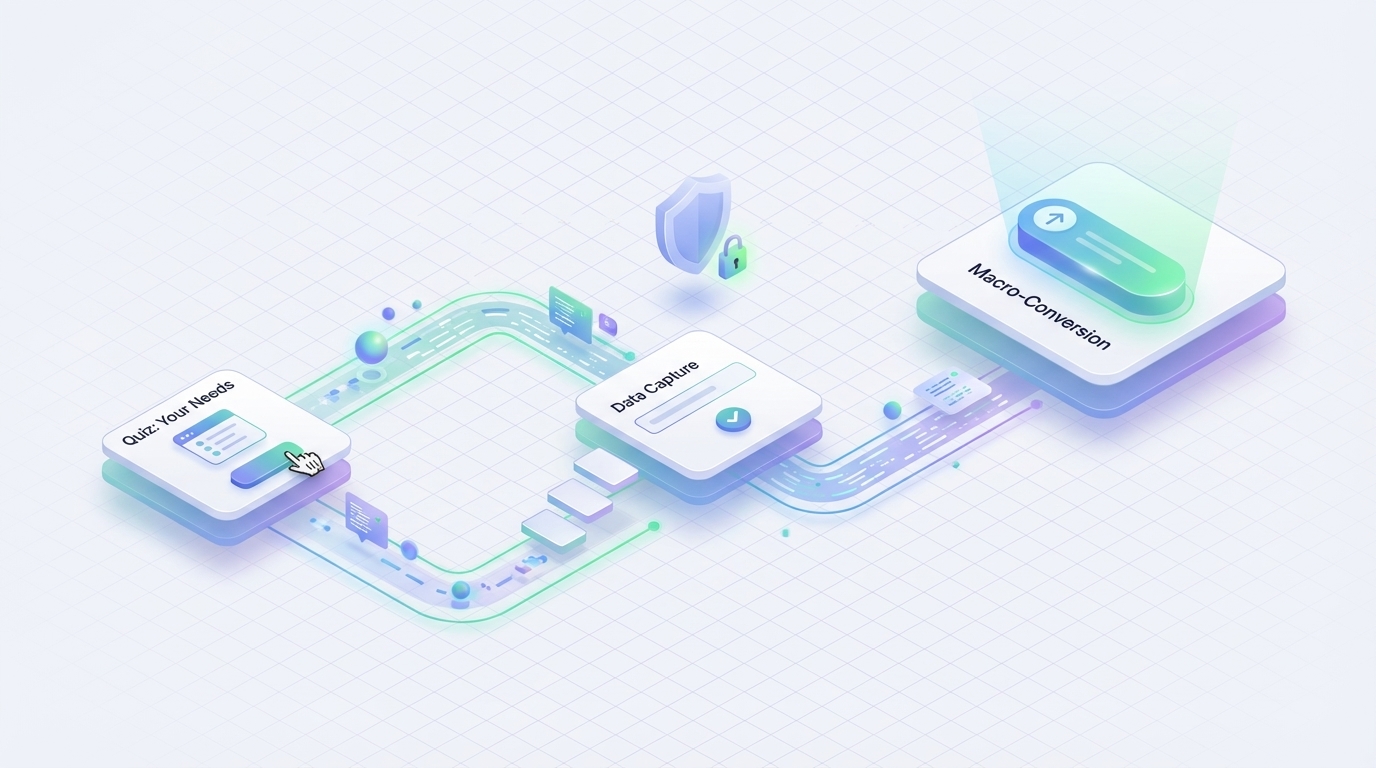
The Science of Incremental Compliance
Successful digital interactions are built on a deep understanding of human behavior and the subtle triggers that influence decision-making. Marketers must look beyond what users click and focus on the underlying reasons they choose to engage with specific elements. Aligning website interactions with natural cognitive patterns allows companies to create a frictionless path toward a final purchase.
The Commitment and Consistency Principle
Robert Cialdini's psychological principle of commitment suggests that people have a strong internal drive to be consistent with their previous actions. Once a person takes a small step toward a goal, they feel a subconscious pressure to follow through with larger related actions to maintain their self-image. This behavior allows marketers to secure small wins early in the user journey, making the final "big ask" feel like a natural progression.
Our data shows that implementing a micro-commitment strategy can improve conversion rates by 20-40% across various industries. This growth occurs because each small click or interaction primes the brain for more significant involvement. For instance, a user who answers a simple poll is significantly more likely to fill out a lead form later because they've already identified themselves as an active participant.
The foot-in-the-door technique increases user compliance by establishing a baseline of agreement. A high-performing landing page might apply this principle by asking a non-intrusive question about a visitor's business needs before showing a pricing table. This initial engagement creates a psychological anchor that makes it harder for the user to abandon the process midway.
Reducing Cognitive Friction and Choice Paralysis
Cognitive friction occurs when a user encounters an obstacle that makes them pause or feel overwhelmed by a request. A prominent "Buy Now" button presented to a first-time visitor often triggers a defensive response because the mental cost of the decision is too high. Micro-conversions reduce this friction by offering low-stakes interactions that deliver value without requiring a financial commitment or long-term commitment.
Interactive tools like quizzes or ROI calculators create a sense of cognitive ease by putting the user in control of the experience. Instead of being told what to do, the visitor explores their own needs through a structured interface. Successful interactive content marketing relies on providing immediate feedback to users, which reduces bounce rates and increases session duration.
Limiting the number of choices presented during these interactions is also necessary to maintain momentum and prevent choice paralysis. Research from Sheena Iyengar's jam study shows that limiting choices to 6 options drives a 30% purchase rate, while offering 24 options can drop conversions to just 3%. By using micro-interactions to narrow down preferences, brands can prevent the paradox of choice from stalling the funnel.
Distinguishing Between Micro and Macro Conversions
It's important to recognize that not every click on a website carries the same weight or indicates the same level of intent. A healthy marketing funnel requires a balance between process-oriented goals and the ultimate outcome that drives revenue for the business. A micro-conversion is a small, specific action a website visitor takes that indicates they are moving closer to a larger desired action.
Process and Navigation Micro-conversion Examples
Process micro-conversions represent interactions that demonstrate a user's engagement with your brand's core message or content. These actions include viewing a specific product video, adding a product to the cart, or spending several minutes on an educational page. These behaviors indicate that the visitor is actively consuming information and moving closer to a buying decision.
Navigation micro-conversions focus on the path a user takes through the website to find more information about the offering. Examples of navigation-based conversions include clicking through to a pricing page, visiting the "About Us" section, or moving from a search results page to a specific product detail view. These clicks suggest that the user is intentionally exploring the site's structure to evaluate credibility.
Tracking both types of micro-conversions is necessary to identify exactly where users drop off before reaching the macro-conversion. If process conversions are high but navigation conversions are low, the content might be engaging but failing to direct users to the next stage. Comprehensive tracking allows marketing teams to optimize the transition between interest and investigation.
Defining the Macro-Conversion: The Ultimate Goal
The macro-conversion is the final action that directly contributes to the business's bottom line or primary objective. Common examples of macro-conversions include completing an eCommerce order, signing up for a paid subscription, or submitting a formal request for a product demo. These actions represent a significant commitment and typically occur at the end of a successful customer journey.
While the macro-conversion is the primary revenue driver, it's often unattainable if the user hasn't been properly prepared. Most visitors require a series of well-placed micro-conversions to warm up before they feel comfortable making a purchase or sharing sensitive contact information. Brands that focus solely on the final sale, without nurturing the smaller steps, often see much higher bounce rates.
The Cost of Ignoring Micro-Conversions
Ignoring micro-conversions often leads to the leaky bucket syndrome, where brands spend money on cold traffic but fail to capture data from the vast majority of visitors. Only about 2% of first-time visitors convert at a macro level, leaving 98% of your traffic unmonetized. Without micro-goals, you lose the opportunity to nurture these prospects through retargeting or email follow-ups.
Building a strategic competitor gap analysis can reveal that top-performing competitors are already capturing these smaller leads. By failing to offer a low-stakes way to engage, you effectively hand your prospects over to brands that provide more intermediate value. This loss of potential market share increases your customer acquisition costs over time.
Data silos also become problematic when micro-conversions are neither tracked nor prioritized. Without understanding the small steps users take, your marketing team cannot identify which content topics are actually driving interest. Effective SaaS content marketing depends on using these interaction signals to refine your overall strategy and budget allocation.
Warming Up Cold Traffic: The Bridge to Engagement
Converting visitors who have zero prior brand awareness is one of the most difficult challenges in digital marketing. Micro-conversions serve as a handshake, establishing a connection before the brand attempts a more formal sales pitch. This process of warming up cold traffic is necessary to build a sustainable lead-generation engine.
Identifying Engagement Thresholds
An engagement threshold is the point at which a user has consumed enough content to be receptive to a more significant request. Identifying this tipping point requires analyzing how much value a visitor needs to receive before they feel comfortable providing an email address. By monitoring these thresholds, brands can time their lead capture forms to appear exactly when the user's interest is at its peak.
Lead scoring systems can use micro-conversions to quantify a user's readiness for direct outreach or sales intervention. A user who has watched three videos and visited the pricing page twice has a higher engagement score than someone who has only read one blog post. This data allows marketing teams to prioritize high-intent leads and deliver more relevant follow-up content.
Heatmaps and session recordings are valuable tools for visualizing these engagement thresholds in real-time. These visual aids show where users tend to linger, what elements they ignore, and where they typically drop off the page. Observing these patterns helps designers place micro-interactions in the natural flow of attention, ensuring the ask feels timely rather than intrusive.
Creating Low-Stakes Value Exchanges
Every micro-conversion should be viewed as a value exchange where the user gives their time or attention in return for something useful. Even a simple click requires a mental effort, so the brand must ensure the result of that click justifies the action. This value-first approach builds a positive association with the brand and encourages the user to continue their journey.
Low-stakes value can be delivered through small wins, such as revealing a hidden tip or providing an instant score from a single question. For example, a marketing site might offer a quick check to see if a user's website speed is above average. This interaction provides immediate insight to the user while simultaneously demonstrating the brand's expertise in a specific technical area.
These small wins contribute to a trust bank that the brand can draw from when it's time to ask for a macro-conversion. When a user has already received several pieces of helpful information for free, they are more likely to view a paid offering as a worthwhile investment. Providing value upfront reduces the skepticism that often accompanies cold traffic and builds a foundation for a long-term relationship.
Industry-Specific Micro-Conversion Strategies
The types of micro-conversions that work best often depend on the specific business model and target audience. A B2B SaaS company has different trust requirements than a direct-to-consumer eCommerce store. Tailoring your incremental asks to your industry ensures that the interactions feel relevant and helpful to the user.
B2B SaaS: Building Technical Credibility
In the B2B SaaS world, micro-conversions primarily focus on demonstrating technical competence and ROI. Downloading a white paper, registering for a live webinar, or using an API documentation search is a strong indicator of middle-funnel interest. These actions suggest that the prospect is evaluating how your software will fit into their existing enterprise infrastructure.
Interactive demos allow prospects to experience the product interface without a full sales call. Allowing a user to click through a simulated dashboard fosters a sense of ownership and reduces the fear of a steep learning curve. These micro-interactions are highly effective at moving technical buyers closer to a formal request for a trial.
eCommerce: Enhancing the Shopping Experience
eCommerce micro-conversions focus more on personalization and reducing the friction of the physical shopping experience. Creating a wishlist, using a size guide, or signing up for "back in stock" notifications are excellent examples of small commitments. These actions keep the user engaged with the brand even if they aren't ready to complete a transaction today.
Product quizzes that help users find the right skincare routine or clothing fit are particularly successful in this niche. Quizzes generate 20 times the engagement of static lead magnets because they provide personalized outcomes based on user-provided data. This interaction captures zero-party data that can later be used for highly targeted email marketing campaigns.
Leveraging Interactive Content for Micro-Commitments
Quizzes are highly effective for building trust because they tap into the user's desire for self-discovery and personalized insights. People are naturally curious about their own habits, skills, or needs, which keeps them engaged through multiple questions. A well-designed quiz turns a standard marketing message into an interactive journey where the user is the main character.
Utility-based micro-conversions, such as ROI calculators or savings estimators, provide immediate, personalized value to visitors. These tools allow potential customers to see exactly how a product or service will impact their specific situation or budget. By providing concrete numbers, brands can prove their value proposition mathematically before the user even speaks to a sales representative.
Simple one-click polls are excellent entry-level micro-conversions because they require almost zero effort from the user. These interactions are perfect for the top of the funnel, where visitors are still testing the waters and aren't ready for a deep dive. A poll can ask a broad question about an industry trend or a common pain point to engage the user quickly.
Technical Implementation: Tracking Micro-Conversions in GA4
Google Analytics 4 uses an event-based model that is well-suited to tracking a wide range of micro-conversions. Marketers should define specific events for actions such as button clicks, video plays, and form starts to gain a clear picture of user behavior. Google Analytics 4 records micro-conversions as specific event data that can be analyzed in depth.
Setting Up Event Naming Conventions
To maintain clean data, you should use a consistent naming convention for your micro-conversion events. For instance, you might use a prefix like "micro_" to distinguish these actions from your primary "macro_" conversions. Examples of clear event names include "micro_video_start," "micro_scroll_75," or "micro_pdf_download."
This granular level of tracking allows for a more nuanced understanding of how users interact with different parts of the site. You can use these events to build custom audiences for retargeting campaigns in Google Ads. This ensures that you are spending your advertising budget on users who have already shown a baseline level of interest.
Using Path Explorations for Optimization
Path Explorations in GA4 are useful for seeing which micro-conversions most frequently lead to a final macro-conversion. By analyzing these paths, marketers can identify the most effective interaction sequences and double down on what works. This data-driven strategy ensures that the funnel is optimized for actual behavior rather than assumptions.
Assigning conversion values to these micro-events helps the business see their relative impact on the overall customer journey. While a newsletter signup might be worth less than a demo request, it still carries a measurable value. This approach allows teams to justify spending resources on optimizing the topic clusters that drive these small interactions.
Best Micro-conversion Tools for Lead Generation
Selecting the right tools to facilitate micro-conversions can significantly impact your success rate. For quizzes and assessments, platforms like Typeform or Outgrow offer user-friendly interfaces that encourage completion. These tools are designed to look professional and work seamlessly on mobile devices, which is important for maintaining trust.
For interactive demos and product tours, software such as Navattic or Arcade lets you create clickable simulations. These tools help you show the value of your product without requiring a complicated setup or backend integration. By making the product tangible, you satisfy the user's desire for immediate proof of capability.
Exit-intent tools like OptinMonster or Hello Bar can capture a final micro-conversion before a user leaves your site. These tools detect when a cursor moves toward the browser tab and trigger a relevant offer, such as a discount code or a lead magnet. This second-chance interaction can recover a significant portion of traffic that would otherwise be lost.
Data Privacy and Micro-Conversions
With the rise of GDPR and CCPA, brands must handle the data gathered from micro-conversions with extreme care. Transparency is the foundation of digital trust, so you must clearly state how you will use the information provided in quizzes or polls. Providing a clear link to your privacy policy within the interaction helps reassure the user.
Zero-party data, which users willingly volunteer, is incredibly valuable but carries significant security responsibilities. You should ask only for the information necessary to deliver the value promised in the micro-interaction. Over-asking for personal details too early can trigger a defensive response and cause the user to abandon the process.
Privacy-first tracking methods are also becoming more important as third-party cookies are phased out. Focusing on first-party data and direct interactions ensures that your marketing strategy remains resilient to changes in browser technology. Building trust through ethical data practices is a long-term investment that protects your brand's reputation.
Common Pitfalls: When Micro-Conversions Create More Friction
While micro-conversions are powerful tools, they can also become hurdles if they are poorly executed. Over-complicating the user journey with too many requests can lead to frustration and abandonment. If a visitor is hit with a poll, a chat widget, and a newsletter signup all at once, they are likely to leave the site immediately.
Relevance is another major factor in preventing micro-friction during the conversion process. Every small interaction should relate directly to the final goal and provide a logical step forward for the user. If a micro-conversion feels disconnected from the brand's core offering, it will only serve as a distraction, breaking the user's focus.
The clutter effect can also negatively impact the mobile user experience, where screen space is limited. What works as a helpful sidebar interaction on a desktop can become a frustrating obstacle on a smartphone. Ensuring that micro-interactions are responsive and minimally intrusive is necessary for maintaining a high conversion rate across all devices.
FAQ: Common Questions About Micro-Conversions
What is the difference between a micro and macro conversion?
A micro-conversion is a small step, like watching a video or clicking a link, that indicates interest but not a final sale. A macro-conversion is the ultimate goal of the website, such as an eCommerce order or a paid subscription. Micro-conversions serve as the building blocks that lead to the final macro-result.
How many micro-conversions should a landing page have?
A landing page should typically focus on one primary micro-conversion to avoid overwhelming the visitor. Limiting choices is important because too many options can lead to choice paralysis and lower overall engagement. You can test different options to see which single micro-ask resonates best with your specific audience.
Can micro-conversions replace macro-conversions?
Micro-conversions cannot replace macro-conversions because they do not directly generate revenue or advance primary business goals. They are auxiliary metrics that help you understand the health of your sales funnel and your audience's engagement. Use them to support and improve the rate at which users reach your macro-goals.
Should I track every click as a micro-conversion?
Tracking every click can lead to data noise and make it difficult to identify meaningful patterns. You should only track actions that represent a significant step in the buyer's journey or provide valuable insights into user intent. Focus on interactions that are highly correlated with eventual macro-conversions.
Start Building Trust Through Scalable Content with Brand Voice
Leveraging micro-conversions is a sophisticated way to build trust and reduce psychological resistance in the digital sales funnel. By focusing on small commitments like quizzes, calculators, and navigation-based clicks, you can bridge the gap between cold traffic and loyal customers. This approach uses the principles of consistency to guide visitors through a natural progression of value exchanges that lead to a final sale.
Achieving this level of engagement requires a consistent supply of high-quality, interactive-ready content that resonates with your target audience. We understand that producing the volume of technically deep articles needed to fuel these strategies can be a significant challenge for growing teams. Our expertise lies in creating content that not only ranks well in search results but also serves as the perfect foundation for your engagement strategies.
We specialize in developing technically accurate, brand-aligned articles that help you build trust and generate real business results. Ready to transform your funnel with content designed for engagement? Book a demo with us to start your subscription for ready-to-publish SEO articles today.
